HRP Enzyme Supplier for Diagnostics: Qualifying a Bulk Source for Reagent and Kit Production
Source diagnostic grade HRP and ELISA enzymes for immunoassay formulation, with QC, COA/TDS/SDS review, pilot validation, and cost-in-use guidance.
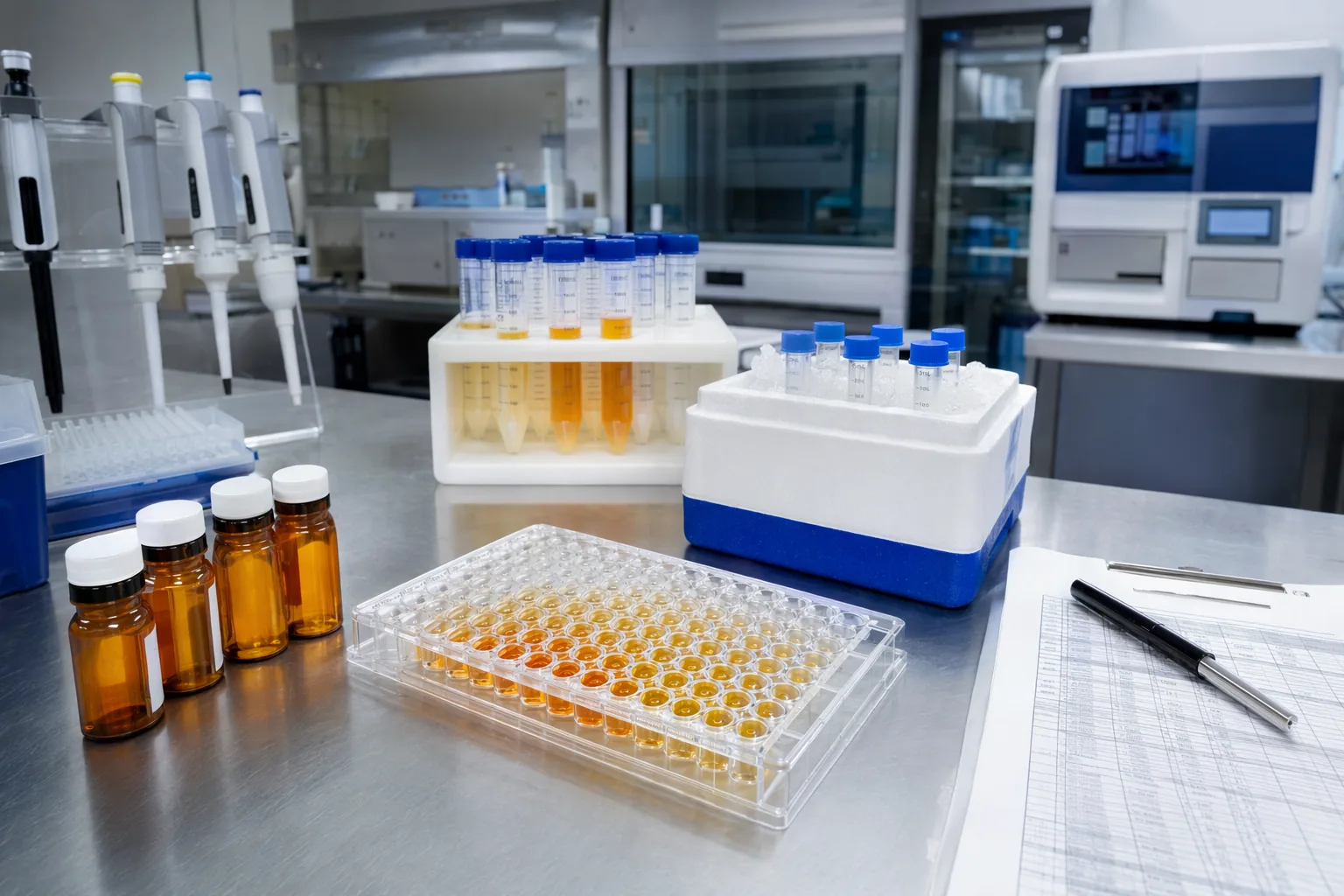
Diagnostic reagent formulators and immunoassay manufacturers rarely change an enzyme supplier lightly: every change means requalification, new stability data and, for regulated products, change documentation. Choosing the right HRP source at the start saves that work later.
This page is for purchasing and quality teams qualifying an HRP supplier for production: what to ask, how to run the qualification, and how to keep supply steady once the source is approved. To request a quote, use the inquiry form on our home page or email hello@mail.enzymelinked.com with the product, quantity and destination country.
What a diagnostic manufacturer needs from an HRP supplier
A diagnostic business needs more than catalog availability. It needs consistent activity from lot to lot, documentation that fits its quality system, packaging that suits its batch sizes, and advance notice of any change in the product or its manufacture.
Our assay-grade HRP is specified at 200–400 U/mg, supplied as lyophilized powder or solution, with a 12-month shelf life sealed at -20°C or 2–8°C. Manufactured under ISO 9001 and ISO 13485 quality standards; supplied as RUO grade for assay development and research.
Qualification step by step
1. Written specification: activity value and method, form, storage, shelf life, pack size and the documents you need with each lot.
2. Documents: review the COA, TDS and SDS of the sample lot before testing starts.
3. Sample trial: test the enzyme in your own conjugation and assay format, with your real sample matrix, against your current material if you have one.
4. Second lot: where the product risk justifies it, confirm the result on a second lot before approval.
5. Supply terms: agree pack sizes, change notification and delivery schedule before the first production order.
Incoming QC once the source is approved
Link incoming checks to what matters in the finished product. Check identity and documents against the COA, then run a functional test of each new lot in your assay: signal, background in blank wells, positive-control response and precision.
Keep a retained sample from each lot and record which kit lots it went into. If a complaint comes in, you can then trace it back to the enzyme lot in one step.

Keeping supply steady
For products sold over several years, supply continuity matters as much as price. Plan orders against your production calendar, and agree how you will be told about any process change.
Where supply risk is material for your business, qualify a backup source or hold a safety stock sized to your requalification time. Pack sizes from 1 g to 1 kg, with custom packaging, let you match stock to use.
Cost-in-use for diagnostic manufacturing
The lowest unit price may not be the lowest cost-in-use. Assess a supplier on delivered performance per kit: conjugate dilution, signal stability, repeat-test rates, rejected lots, documentation workload, lead time and packaging losses.
Prices, lead times and freight are quoted per order. Minimum order is 1 g for research quantities and 100 g for bulk.
What to send with a quote request
Product: HRP, the grade and the form you need.
Quantity: the amount per order, the expected annual volume and the pack size.
Use: the reagent or kit it goes into and the documents your quality system requires.
Destination: the delivery country, so freight can be quoted.
To request a quote, use the inquiry form on our home page or email hello@mail.enzymelinked.com with the product, quantity and destination country.
Diagnostic Enzymes (ELISA & Assay Grade) for Research & Industry
Need Diagnostic Enzymes (ELISA & Assay Grade) for your lab or production process?
ISO 9001 certified · Food-grade & research-grade · Ships to 80+ countries
Frequently Asked Questions
What makes an HRP enzyme suitable for diagnostic formulations?
Consistent activity measured by a stated method, low background in your assay, suitable form and storage, and documents that fit your quality system. Confirm it by testing a sample lot in your own format. Review the COA, TDS, and SDS, then confirm signal, background, stability, and lot-to-lot reproducibility in your own validated immunoassay format.
How should we qualify a new HRP enzyme supplier for ELISA production?
Write the specification first, review the COA, TDS and SDS, test the sample in your own conjugation and assay format, confirm on a second lot where the risk justifies it, and agree supply terms such as change notification before the first order. Start with documentation review, including COA, TDS, SDS, activity method, shelf-life guidance, and change-control expectations.
When should alkaline phosphatase be considered instead of HRP?
When the assay format, substrate or signal window suits it better. The two enzymes use different substrates and buffers, so a switch means re-optimizing the assay. We can quote both for a side-by-side trial.
How does cost-in-use differ from enzyme purchase price?
Cost-in-use adds the enzyme quantity per kit, conjugation yield, repeat tests, rejected lots, stability losses and freight to the purchase price. A grade with a higher unit price can cost less per passed kit lot.
Do you quote distributors and resellers?
Yes. Send the product, quantity, pack size and destination country with your inquiry.
Request a quote for diagnostic-grade HRP
Turn This Guide Into a Supplier Brief Request diagnostic grade HRP and ELISA enzyme samples, COA/TDS/SDS review, and pilot-scale qualification support. See our application page for Diagnostic Enzymes for Reliable Assay Performance at /applications/diagnostics-importance/ for specs, MOQ, and a free 50 g sample.
Contact Us to Contributehello@mail.enzymelinked.com