HRP Enzyme Supplier for Diagnostics: Formulation Guide for ELISA and Immunoassay Kits
Source diagnostic grade HRP and ELISA enzymes for immunoassay formulation, with QC, COA/TDS/SDS review, pilot validation, and cost-in-use guidance.
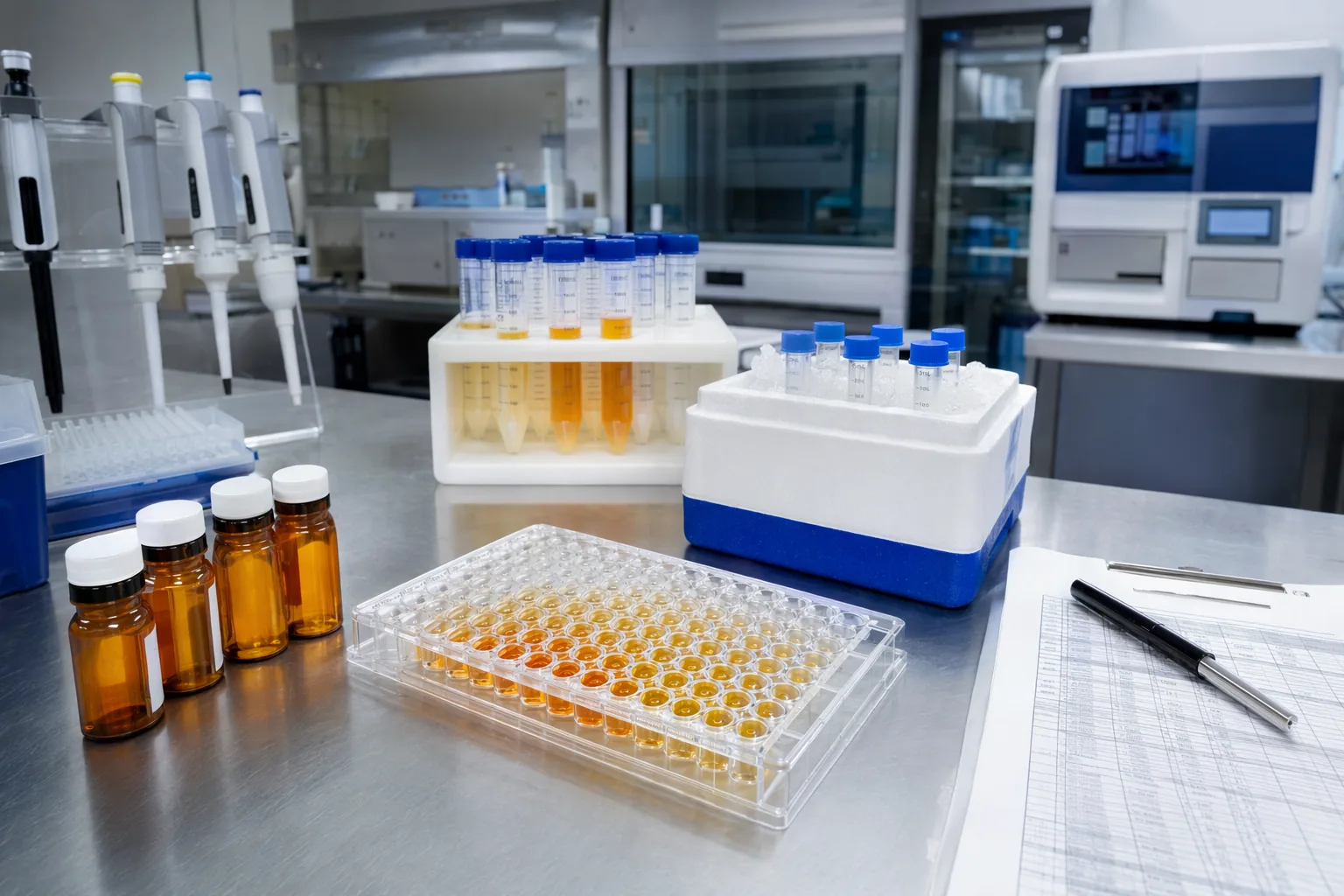
Select HRP enzyme and alkaline phosphatase diagnostic materials with the process controls, documentation, and lot-to-lot consistency required for diagnostic assay manufacturing.
What diagnostic formulators need from an HRP enzyme supplier
A hrp enzyme supplier for diagnostics must support more than catalog availability. In ELISA and other immunoassay formats, horseradish peroxidase is often selected because it can generate strong colorimetric, chemiluminescent, or fluorescent signal when paired with an appropriate substrate. The enzyme supplier should understand diagnostic grade enzyme requirements: consistent activity, low interfering impurities, suitable buffer compatibility, reliable cold-chain handling, and clear documentation. For B2B buyers, the practical question is whether the enzyme performs reproducibly after conjugation to antibodies, antigens, streptavidin, or other assay components. Start with a technical sample, then evaluate the material under your actual coating, blocking, wash, incubation, and detection conditions. Industrial HRP enzyme diagnostics programs should also confirm that scale-up lots match pilot lots in activity, purity profile, moisture, preservative system, and packaging format.
Prioritize lot consistency over nominal activity alone. • Request COA, TDS, SDS, and test method summaries before qualification. • Validate performance in the complete assay, not only in a standalone activity test.
Formulation conditions for HRP enzyme in ELISA systems
HRP enzyme for diagnostics is commonly stored in buffered aqueous systems near pH 6.0-7.5, often at 2-8 °C unless the supplier’s TDS specifies a validated frozen or lyophilized format. During ELISA development, the conjugate concentration is usually optimized by checkerboard titration; practical starting bands are often 0.05-2.0 µg/mL for HRP-conjugated binders, depending on affinity, plate surface, antigen load, and substrate sensitivity. Assay incubation temperatures are frequently room temperature or 37 °C, but elevated temperatures can increase background or accelerate enzyme degradation if stabilizers are not compatible. TMB substrate systems are typically acidic after stop solution, while HRP reaction conditions depend on the substrate buffer. Avoid repeated freeze-thaw cycles, high peroxide exposure before use, and unnecessary contact with azide when HRP activity is required.
Optimize conjugate dose by signal-to-background ratio, not maximum signal. • Check stability in the final diluent, blocker, preservative, and substrate workflow. • Run side-by-side testing at intended incubation temperature and time.
Comparing HRP, alkaline phosphatase, and other diagnostic enzymes
ELISA enzymes include HRP and alkaline phosphatase diagnostic options, each with formulation tradeoffs. HRP is widely used when rapid signal development, compact conjugates, and common chromogenic or chemiluminescent substrates are desired. Alkaline phosphatase is often evaluated when longer signal development, certain substrate chemistries, or different stability profiles are useful; its activity is typically associated with alkaline pH conditions, commonly around pH 8.0-10.5 depending on the substrate system. General enzyme diagnostics programs may also involve enzymes used as analytes or controls, such as materials relevant to lipase enzyme assay diagnostics, but those are different from reporter enzymes used for immunoassay signal generation. A supplier should help distinguish reporter enzyme performance from analyte enzyme calibration needs and provide application-specific guidance without implying clinical claims.
Use HRP when fast signal development and broad ELISA compatibility are priorities. • Evaluate alkaline phosphatase when the assay benefits from alkaline substrate chemistry. • Separate reporter enzyme sourcing from enzyme analyte control sourcing.
Quality control checks before production release
Before approving an HRP enzyme supplier for ELISA or immunoassay production, build a QC plan that links incoming specifications to finished-kit performance. Incoming QC may include enzyme activity by defined substrate method, protein concentration, purity or impurity profile, appearance, pH, conductivity, bioburden where applicable, and identity confirmation. Functional QC should include conjugation yield, retained activity after conjugation, nonspecific binding, background in blank wells, positive-control response, limit-of-detection impact, linearity, and precision across plates and operators. For diagnostic grade enzyme lots, ask whether the supplier can provide lot retain samples, change notification, shelf-life data, recommended storage, and packaging sizes that reduce open-vial exposure. Pilot validation should include at least one representative accelerated stability condition, such as 37 °C challenge for defined intervals, while final shelf life must be established by your validated protocol.
Compare new lots to an approved reference lot. • Track both enzyme activity and finished-assay response. • Include matrix testing for relevant sample types. • Document acceptance criteria before scale-up.
Supplier qualification and cost-in-use for diagnostic manufacturing
The lowest unit price may not be the lowest cost-in-use. A hrp enzyme supplier for immunoassay or hrp enzyme supplier for elisa should be assessed on delivered performance per kit, not only price per milligram or activity unit. Include required conjugate dilution, signal stability, repeat-test rates, rejected lots, documentation workload, lead time, minimum order quantity, and packaging losses in the calculation. Supplier qualification should review COA, TDS, SDS, origin and handling statements, allergen or animal-origin information where relevant, change-control process, lot reservation options, and technical response time. If your team is benchmarking multiple sources for industrial hrp enzyme diagnostics, run the same pilot protocol on each candidate lot. A strong supplier will support formulation screening, provide realistic storage guidance, and avoid unsupported performance claims outside your validated diagnostic application.
Calculate enzyme cost per released kit or plate. • Include failure risk, documentation effort, and lead-time exposure. • Qualify backup lots or secondary sources where business continuity requires it.
Technical Buying Checklist
Buyer Questions
A suitable HRP enzyme for diagnostics should have defined activity, consistent purity, controlled storage conditions, and documented lot traceability. For ELISA manufacturing, the enzyme must also perform after conjugation and in the final assay buffer system. Review the COA, TDS, and SDS, then confirm signal, background, stability, and lot-to-lot reproducibility in your own validated immunoassay format.
Start with documentation review, including COA, TDS, SDS, activity method, shelf-life guidance, and change-control expectations. Then run a pilot study using your actual conjugation chemistry, blockers, sample matrices, incubation times, and substrate system. Compare the candidate lot against your reference lot for signal-to-background ratio, precision, linearity, accelerated stability, and cost-in-use before production approval.
A practical screening range for HRP-conjugated antibodies or binders is often 0.05-2.0 µg/mL, but the correct level depends on binder affinity, antigen density, plate surface, substrate sensitivity, and target dynamic range. Use checkerboard titration against coating concentration and sample level. Select the dose that provides robust signal, low background, acceptable precision, and stable performance after storage.
Alkaline phosphatase diagnostic systems may be considered when the assay benefits from alkaline substrate chemistry, longer development windows, or a different signal profile. HRP is often preferred for rapid ELISA workflows and broad substrate availability, but the better choice depends on assay design. Compare both enzymes under the same matrix, incubation, substrate, and stability conditions before locking the formulation.
Cost-in-use measures the enzyme cost required to release a finished diagnostic kit or plate, including dilution factor, conjugation yield, rejects, repeat testing, documentation burden, lead time, and packaging waste. A higher-priced diagnostic grade enzyme may reduce total cost if it improves lot consistency, stability, signal-to-background ratio, or manufacturing yield. Pilot validation is the best way to quantify the difference.
Related Search Themes
general enzyme diagnostics, roche diagnostics enzyme purification, quest diagnostics tay sachs enzyme, lipase enzyme assay diagnostics, industrial hrp enzyme diagnostics, hrp enzyme supplier for immunoassay
Diagnostic Enzymes (ELISA & Assay Grade) for Research & Industry
Need Diagnostic Enzymes (ELISA & Assay Grade) for your lab or production process?
ISO 9001 certified · Food-grade & research-grade · Ships to 80+ countries
Frequently Asked Questions
What makes an HRP enzyme suitable for diagnostic formulations?
A suitable HRP enzyme for diagnostics should have defined activity, consistent purity, controlled storage conditions, and documented lot traceability. For ELISA manufacturing, the enzyme must also perform after conjugation and in the final assay buffer system. Review the COA, TDS, and SDS, then confirm signal, background, stability, and lot-to-lot reproducibility in your own validated immunoassay format.
How should we qualify a new HRP enzyme supplier for ELISA production?
Start with documentation review, including COA, TDS, SDS, activity method, shelf-life guidance, and change-control expectations. Then run a pilot study using your actual conjugation chemistry, blockers, sample matrices, incubation times, and substrate system. Compare the candidate lot against your reference lot for signal-to-background ratio, precision, linearity, accelerated stability, and cost-in-use before production approval.
What dosage range should we test for HRP conjugates in immunoassay development?
A practical screening range for HRP-conjugated antibodies or binders is often 0.05-2.0 µg/mL, but the correct level depends on binder affinity, antigen density, plate surface, substrate sensitivity, and target dynamic range. Use checkerboard titration against coating concentration and sample level. Select the dose that provides robust signal, low background, acceptable precision, and stable performance after storage.
When should alkaline phosphatase be considered instead of HRP?
Alkaline phosphatase diagnostic systems may be considered when the assay benefits from alkaline substrate chemistry, longer development windows, or a different signal profile. HRP is often preferred for rapid ELISA workflows and broad substrate availability, but the better choice depends on assay design. Compare both enzymes under the same matrix, incubation, substrate, and stability conditions before locking the formulation.
How does cost-in-use differ from enzyme purchase price?
Cost-in-use measures the enzyme cost required to release a finished diagnostic kit or plate, including dilution factor, conjugation yield, rejects, repeat testing, documentation burden, lead time, and packaging waste. A higher-priced diagnostic grade enzyme may reduce total cost if it improves lot consistency, stability, signal-to-background ratio, or manufacturing yield. Pilot validation is the best way to quantify the difference.
Related: Diagnostic Enzymes for Reliable Assay Performance
Turn This Guide Into a Supplier Brief Request diagnostic grade HRP and ELISA enzyme samples, COA/TDS/SDS review, and pilot-scale qualification support. See our application page for Diagnostic Enzymes for Reliable Assay Performance at /applications/diagnostics-importance/ for specs, MOQ, and a free 50 g sample.
Contact Us to Contribute